


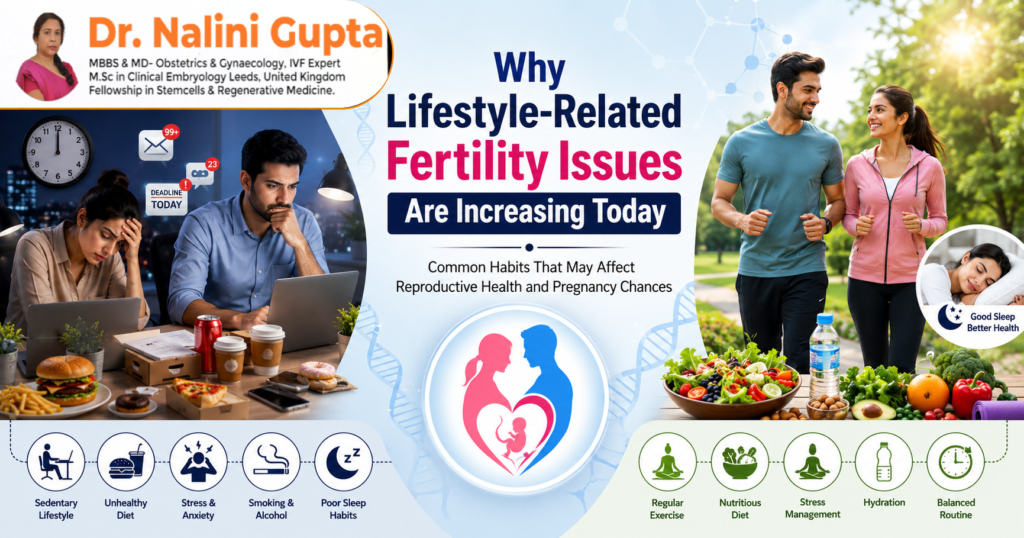
Fertility rates are increasing day by day through choices that seem perfectly ordinary until the results are not.
And right now, fertility specialists are seeing those consequences more than ever.
Change in Generations
More couples in their late 20s and early 30s are walking into fertility clinics today than in any previous generation at the same age. The biology has not changed. The lifestyle has.
Think about what a typical day actually looks like for most working adults. Sitting for eight to ten hours. Eating on deadline. Sleeping less than the body needs. Running on caffeine and cortisol. Repeat, five days a week, for years.
That pattern leaves a mark. And one of the places it leaves its mark most visibly is reproductive health.
The Habits Nobody Connects to Fertility
Chronic stress is the big one. Elevated cortisol does not just make you feel wired and exhausted. It actively suppresses the hormones that regulate ovulation and sperm production. The body, under prolonged stress, quietly deprioritises reproduction. It is not personal. It is just biology protecting itself.
Sleep deprivation is similarly underestimated. The hormones that govern fertility, LH, FSH, testosterone, are released in patterns tied directly to the body’s circadian rhythm. Disrupt that rhythm consistently and those patterns shift in ways that show up in bloodwork and fertility assessments.
Diet matters more than most people want to hear. Being significantly overweight raises estrogen levels in ways that disrupt ovulation. Being significantly underweight does the same through a different mechanism. Deficiencies in vitamin D, folate, and zinc affect egg quality and sperm health in ways that are measurable but completely silent symptom-wise.
Smoking is one of the more direct offenders. It reduces ovarian reserve in women and lowers sperm count and motility in men. The damage accumulates slowly and starts well before any visible signs appear.
Alcohol affects hormone metabolism through its impact on liver function. Even moderate regular consumption has been linked to cycle irregularities and changes in sperm parameters. Not what anyone wants to hear on a Friday evening, but worth knowing.
The Timing Question
There is also something honest worth saying about delayed family planning. Choosing to start a family later is a legitimate, personal decision and one that makes complete sense for a lot of people. Career, finances, the right relationship. These are real considerations.
But biology does not pause while life gets sorted out. Ovarian reserve declines meaningfully after 35. Sperm quality, while more forgiving with age, also changes over time. Making an informed choice means understanding that timeline clearly, not avoiding it.
The Good News No One Leads With
Lifestyle-related fertility problems are among the most responsive to change. That is genuinely worth sitting with. Weight, sleep, stress, and nutrition are not fixed variables. They are movable ones. Meaningful improvements in fertility markers can happen within months of consistent lifestyle shifts.
But knowing which changes will make the most difference for your specific situation requires knowing where you actually stand first.
Where to Start
If you’re looking for Best Fertility Clinic in South Extension, Dr Nalini Gupta’s Infertility Centre in South Extension, Delhi, lifestyle-related fertility problems are as important as the clinical ones. They do complete hormonal assessments, ovarian reserve tests and have customized treatment plans based on the complete picture of each patient, not a generic protocol.
Dr Nalini Gupta has over 30 years of experience in reproductive medicine and brings the depth and precision that complex fertility presentations truly need.
If you have been trying to conceive without answers or simply want to understand your reproductive health before the journey begins, start here.
Lifestyle-Related Fertility Issues FAQs: Reproductive Health, Pregnancy & Fertility
1. Can lifestyle habits affect fertility and pregnancy chances?
Yes. Daily habits such as poor sleep, chronic stress, unhealthy eating patterns, smoking, excessive alcohol consumption, and lack of physical activity can negatively affect reproductive health and reduce the chances of natural conception.
2. How does stress impact fertility?
Chronic stress increases cortisol levels, which can interfere with the hormones responsible for ovulation in women and sperm production in men. Over time, prolonged stress may reduce fertility and make conception more difficult.
3. Can poor sleep affect reproductive health?
Yes. Fertility hormones such as LH, FSH, estrogen, progesterone, and testosterone follow the body’s natural circadian rhythm. Consistently poor sleep can disrupt hormone balance, affect ovulation, and reduce sperm quality.
4. Does being overweight or underweight affect fertility?
Both can impact fertility. Excess weight may increase estrogen levels and disrupt ovulation, while being underweight can interfere with hormone production and menstrual cycles. Maintaining a healthy weight supports better reproductive health.
5. Do smoking and alcohol reduce fertility?
Yes. Smoking can lower ovarian reserve in women and reduce sperm count, motility, and quality in men. Excessive alcohol consumption may also disrupt hormone balance, affect ovulation, and impair sperm health.
6. At what age does fertility begin to decline?
Female fertility starts to decline gradually in the early 30s and more significantly after age 35 as ovarian reserve decreases. Male fertility declines more slowly, but sperm quality and reproductive outcomes can also be affected by age.
Conclusion
Modern lifestyle habits play a significant role in reproductive health and fertility. Chronic stress, poor sleep, unhealthy nutrition, smoking, alcohol consumption, and delayed family planning can all contribute to fertility challenges in both men and women. The encouraging news is that many lifestyle-related fertility issues can improve with positive changes in daily habits and early medical guidance. Understanding your fertility status through hormonal assessments, ovarian reserve testing, and comprehensive fertility evaluations can help identify potential concerns before they become major obstacles. By combining healthy lifestyle choices with expert fertility care, individuals and couples can significantly improve their chances of achieving a healthy pregnancy and building the family they desire.