


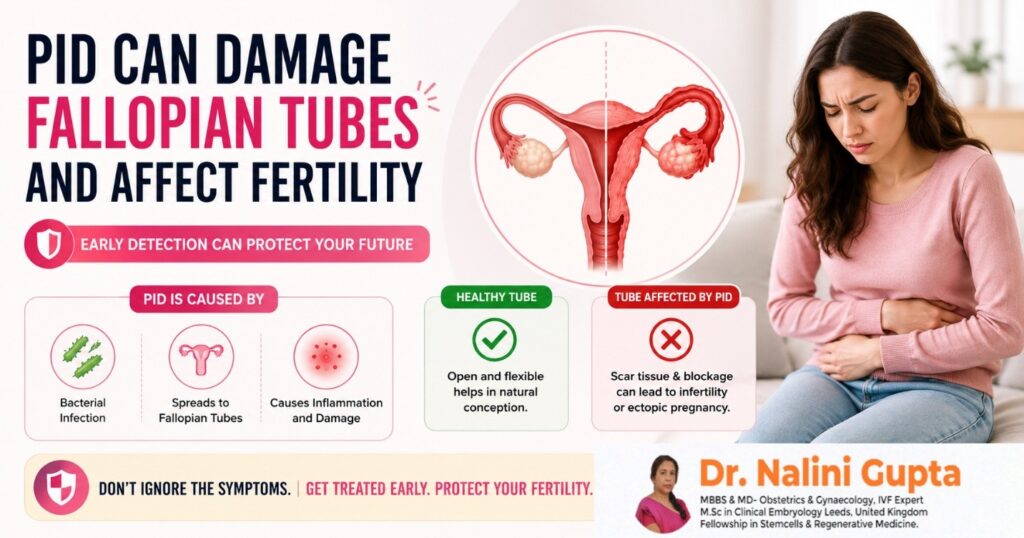
Some health conditions don’t announce themselves loudly. They just settle in quietly and cause damage; till then, the person is already too late. Pelvic Inflammatory Disease (PID) is one of these diseases that causes damage inside the body without even knowing about it until later. When it comes to fertility, the consequences of ignoring it can be lasting.
What is Pelvic Inflammatory Disease
Pelvic Inflammatory Disease is an infection of the female reproductive organs, including the uterus, fallopian tubes, and ovaries. It usually begins when bacteria, most commonly from a sexually transmitted infection like chlamydia or gonorrhoea, travel upward from the vagina or cervix into the upper reproductive tract.
It is more common than most people realise, and the reason it causes so much long-term damage is simple: many women either have no noticeable symptoms or mistake them for something far less serious.
What Are the Symptoms
Some women experience clear signs. Others experience almost nothing at all. That is what makes PID particularly dangerous.
Common symptoms include:
- Dull or sharp pain in the lower abdomen or pelvis
- Unusual vaginal discharge with an unpleasant odour
- Pain during intercourse
- Irregular periods or spotting between cycles
- Fever, chills, or general fatigue in more acute cases
- Pain or burning during urination
The absence of symptoms does not mean the infection is absent. Silent PID is a real and well-documented phenomenon, and it is often only discovered during a fertility investigation.
How Does PID Affect Fertility
Research consistently shows that even a single episode of PID can reduce fertility. Every time someone gets infected, the risk increases considerably.
- Women who have had PID are more likely to:
- Difficult to conceive naturally if the tubes are blocked or damaged
- Ectopic pregnancy – a serious and potentially life-threatening condition
- Some recurrent miscarriage cases
- Chronic pelvic pain that persists long after the infection is cleared and affects quality of life
- The longer PID is left untreated, the more damage it can cause. That’s why early diagnosis and treatment are not optional. They are needed.
Can Fertility Be Restored After PID?
It depends on how much damage there is. Mild scarring may not have much effect on natural conception. Moderate to severe tube damage, however, often requires medical treatment.
Options include:
- Laparoscopic surgery to remove adhesions or address hydrosalpinx
- IVF, which bypasses the fallopian tubes entirely and remains the most effective option for women with significant tubal damage
- A thorough fertility evaluation, including a tubal patency test to assess the extent of any blockage
PID is treatable. The infection itself responds well to antibiotics when caught early. The problem is not the infection. The problem is the damage it leaves behind when it is ignored or goes undetected for too long.
Finding the Right Support After a PID Diagnosis
Whether you have a history of PID or have been trying to conceive without success, the most important thing you can do is get a proper evaluation of your fertility by someone who takes your concerns seriously.
At Dr Nalini Gupta’s Best Fertility Centre in South Extension, Delhi, the approach to fertility care is not just about routine check-ups. Dr. Nalini Gupta has over 30 years of experience in reproductive medicine. She provides holistic assessments such as tubal patency tests, hormonal profiling and customised treatment plans for women with long-term pelvic infections.
What makes the clinic unique is not just the types of treatments offered, but also the approach to care. What makes the clinic unique is not just the types of treatments offered, but also the approach to care. What makes the clinic unique is not just the types of treatments offered, but also the approach to care. Each consultation is thorough, each question answered, and each patient leaves with a clear understanding of where they stand and what their options are. If you have questions about your fertility after PID, this is a good place to start getting answers. If you have questions about your fertility after PID, this is a good place to start getting answers.
Pelvic Inflammatory Disease (PID) FAQs: Symptoms, Fertility Risks, Treatment & Pregnancy
1. Does Pelvic Inflammatory Disease (PID) be the cause of the infertility problem?
Yes. PID may damage fallopian tube, leading to obstructions, scarring and adhesions which prevent eggs and sperm from forming a natural connection. In the absence of treatment, PID is among the main causes of infertility caused by tubal factors in females.
2. What are the first indications of Pelvic Inflammatory disease?
Common signs include pelvic or lower abdominal discomfort, vaginal discharge that is unusual and pain when having an intercourse uncontrollable discharge, urinary pain tiredness, and fever. Many women have minor or no symptoms which makes a diagnosis early difficult.
3. Can you get pregnant after having PID?
A lot of women are able to conceive following PID in particular in cases where the disease is identified and treated promptly. But, damage to the fallopian tube may hinder natural fertility, and may increase the requirement for fertility treatment including IVF.
4. What are the criteria for Pelvic Inflammatory disease identified?
PID can be diagnosed by the combination of test for pelvic health such as ultrasound scans, fertility examinations. In women facing fertility issues, tests such as hysterosalpingography (HSG) or laparoscopy may be recommended to assess tubal damage.
5. What’s the most effective solution for treating infertility caused by PID?
Treatment is contingent on the severity of the injury. The mild cases can be helped by medication or fertility monitors, whereas serious to moderate tubal damage could require surgery via laparoscopic or IVF which eliminates fallopian tubes completely.
6. Do PID make you more prone to Ectopic pregnant women?
Yes. women who have an previous history of PID have a greater risk of having an ectopic pregnancy because the scarring of fallopian tubes could stop fertilized eggs from making it to the uterus leading it to become a part of the tube rather than.
Conclusion
Pelvic Inflammatory Disorder (PID) is one of the most grave reproductive health problem that can cause irreparable damage to the fallopian tubes as well as the ovaries and other organs of the pelvis when left untreated. Since many women suffer from only mild symptoms, or none in any way, the problem usually goes unnoticed until problems with fertility arise. A prompt diagnosis and timely antibiotic treatment may prevent complications that can last for a long time that can result from infertility, pelvic pain and an ectopic pregnancy. Women with an background of PID that are struggling to become pregnant, an extensive fertility test can assist in determining the severity of damage to the tubal and determine the most efficient treatments. The advancements in fertility treatments such as laparoscopic surgery, and IVF the majority of women with PID will still be able to achieve pregnancy success when they have promptly and competent medical care.