


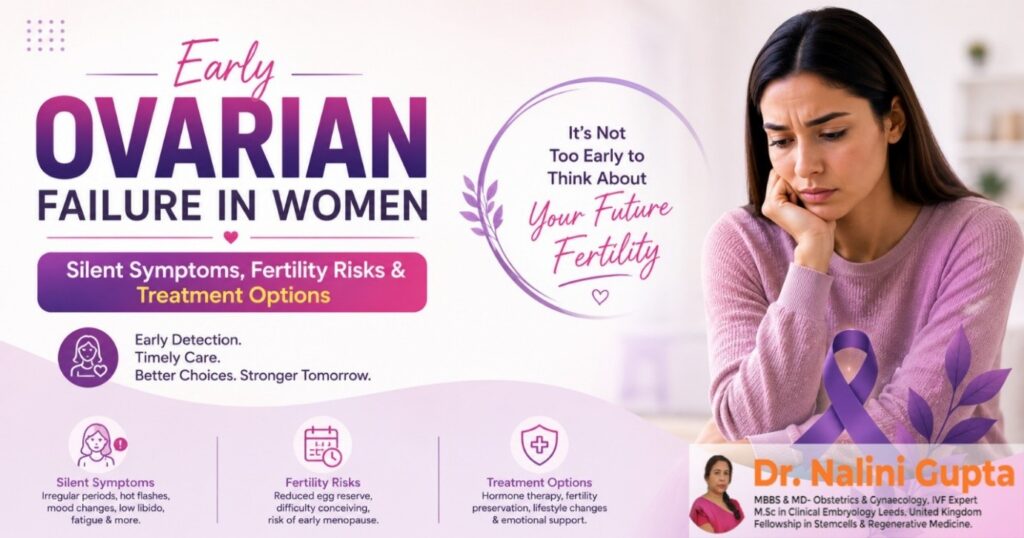
Many women think that the decline of their ovaries occurs in the in their late 40s and early 50s. However, is it possible that it began to occur in the 20s or even 30s? Prior to even thinking about having children? It may sound frightening However, it’s an actual illness known as “Premature Ovarian Insufficiency” (POI) Also known as “Premature Ovarian Failure. ” This affects women who are younger than 40. And the hardest thing about it is that it typically is not detected until it’s too late.
What Is Premature Ovarian Failure (POI)?
It’s a disease that causes the ovaries to stop working normally after age 40. While premature ovarian failure is not necessarily a total loss of function for the ovary. In certain cases the ovaries continue to produce eggs at intervals. The ovarian reserve declines significantly as hormone levels change as well as the odds for natural conception decrease dramatically.
Menopausal symptoms and POI are two distinct things although both can exhibit similar symptoms. The women with POI could occasionally experience periods, and often, spontaneous pregnancies. That’s why detecting early is vital.
The Silent Symptoms Women Ignore
It is difficult for symptoms to recognize and are easy to overlook. It is the reason why obtaining the proper diagnosis is essential since the issue in the case of POI is that it’s symptoms are similar to other conditions that can be a cause of thyroid disorders, stress or irregular menstrual cycles. This makes it easier to miss for months, or sometimes even several years.
The signs that could appear include:
- Missed or irregular periods that cannot be due to PCOS or stress.
- Night sweats and hot flashes during your 20s and 30s
- Dryness of the genital area and pain
- Brain fog or chronic fog
- A low sexual libido
- Unusual anxiety and mood swings
- Inability to grasp concepts despite numerous efforts
Most women are only aware of the presence of POI during a fertility check. Then the time for treatment may be gone by.
How Does POI Affect Fertility?
The condition known as Premature Ovarian Insufficiency (POI): directly reduces the amount and quality of eggs. The key hormone affected is FSH (follicle-stimulating hormone), which rises sharply when the ovaries underperform. AMH (Anti-Mullerian Hormone) The most accurate gauge of reserve ovarian, falls well below the normal levels.
It doesn’t mean that the pregnancy can’t be done. It does however mean that the length of time will be of crucial importance. Every month passes, making an unplanned pregnancy less likely and the time frame to preserve fertility is smaller.
Treatment Options Available Today
Egg donation IVF: The most efficient and preferred option for women suffering from POI that want to have a baby. If the ovarian reserve not enough to produce embryos that are viable, egg donors coupled with IVF give the greatest chance of having a pregnancy that is successful.
Egg Freezing: For women with POI diagnosed during the initial stage, in which a part of the ovarian system is present, freezing eggs can help preserve fertility options for the future until the reserve decreases even more.
Frozen embryo transfer: For Patients with POI using embryos donated by donors or frozen embryos, this meticulously scheduled procedure provides a well-planned and safe way to become pregnant.
If you’ve been suffering from hormone imbalances, irregular menstrual cycles or difficulties in conceiving particularly if you are under the age of 40, an appropriate hormone and ovarian reserve evaluation is the first and most important stage.
At Dr. Nalini Gupta’s Infertility Centre in Delhi, one of the Best Fertility Clinics in Delhi Comprehensive fertility tests which include testing for AMH as well as hormonal profiling and an assessment of the ovarian reserve form part of a personalised treatment plan. Over thirty years of expertise in the field of reproductive medical treatment Dr. Nalini Gupta provides evidence-based and gentle care for women dealing with issues with early fertility and POI.
Premature Ovarian Insufficiency (POI) FAQs: Symptoms, Fertility Risks, Diagnosis & Treatment
1. What are the initial symptoms for Premature Ovarian Insufficiency (POI)?
The first symptoms of POI typically include periodic or absent periods as well as hot flashes, vaginal dryness, night sweats or mood fluctuations, lower libido and difficulties concocting. The symptoms may be present for women who are younger than 40 years old and can be misinterpreted as hormonal imbalances or stress.
2. Are women suffering from Premature Ovarian Insufficiency continue to get pregnant by themselves?
Certain women who suffer from POI are able to conceive naturalally because their ovaries periodically release eggs. But the odds are considerably lower than those with typical, so early diagnosis and planning for fertility extremely crucial.
3. What are the causes of Premature Ovarian Insufficiency of younger women?
The cause of POI could be auto-immune disorders, genetic issues and certain medications like chemotherapy, infections or unconfirmed reasons. Many times, the reason for the occurrence is not known.
4. What is Premature Ovarian Insufficiency identified?
Doctors typically diagnose POI through hormone testing, including FSH (Follicle-Stimulating Hormone), AMH (Anti-Mullerian Hormone), estradiol levels, and ovarian reserve assessments. Ultrasound scans can be utilized to assess the function of the ovary.
5. What is the most effective treatment for females suffering from POI?
The most successful fertility treatment for women suffering from advanced POI is egg donor IVF. If women are diagnosed earlier choices like eggs freezing or fertility preservation or IVF with the eggs of their own may be feasible based on their the ovarian reserve.
6. When should I visit a fertility physician to check for irregular menstrual cycles?
women who are younger than 40 and experiencing irregular menstrual cycles, missed cycles hormone-related symptoms, difficulties conceiving must consult the fertility doctor as quickly as they can. A timely evaluation could help safeguard the fertility options available and enhance treatments results.
Conclusion
Early Ovarian Insufficiency (POI) can be a very serious and often unnoticed issue that could significantly impact the fertility of a woman long beyond the normal age of menopausal. As symptoms such as intermittent periods, hot flashes or mood swings, as well as difficult conceiving, are typically overlooked, many women go in a state of confusion until problems with fertility arise. There is good news the new fertility therapies such as egg freezing, IVF frozen embryo transfer IVF with donor eggs, can offer hope for women suffering from POI. An early diagnosis with tests for ovarian reserve as well as hormonal analysis is essential for ensuring fertility as well as increasing treatments options. If you’re younger than 40 and have unanswered